



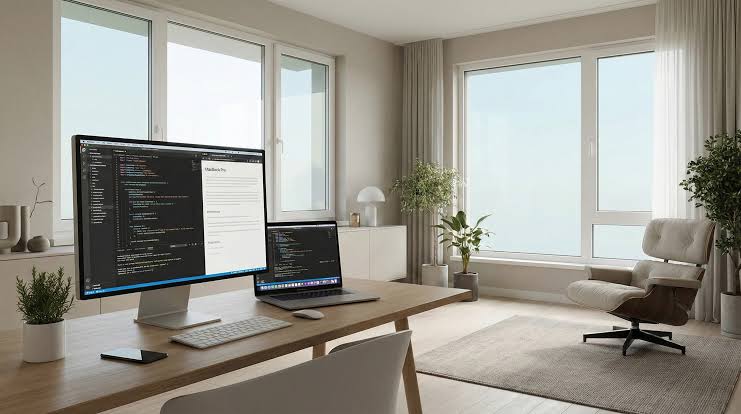
Observe a home office through its difficult hours before choosing a window treatment. Record where glare appears, try practical changes to the desk and screen, then discuss the remaining problem with a qualified installer. A room-specific brief makes it easier to evaluate film without assuming that every bright window needs the same treatment.
Follow the reflection across a working day
The room may seem comfortable during a morning viewing and become frustrating later. A bright patch can cross the desk, a reflection can occupy part of the monitor or the background for a video meeting can become difficult to manage. Note what happens at the times you actually work. The problem is the relationship between the window, the room and your activity, not brightness considered in isolation.
Take simple notes over a few ordinary working days. Describe the time, the affected surface and the task that becomes uncomfortable. Note whether the existing blind is open or closed and whether room lighting is switched on; otherwise, the observations may describe different setups without making that difference clear. Photographs can help explain the layout, although a camera may not reproduce the experience exactly. Avoid presenting the images as precise measurements. Their value is showing an installer or designer where you sit and what you are trying to improve.
Distinguish glare from other concerns. If the room also feels too warm or lacks privacy, note those separately. A single proposed product should not be assumed to solve each problem equally. Keeping the objectives apart lets a professional explain the relevant options and tradeoffs. It also helps you recognise when a change improves one aspect of the room while leaving another unresolved.
Try the changes that do not alter the glass
Before commissioning work, test whether an ordinary furniture adjustment changes the experience. Move the screen or change the desk’s orientation where the room allows it, taking care to keep cables and walkways sensible. The trial need not become a permanent rearrangement. It can reveal which part of the problem depends on the work position and which remains wherever you sit.
Use existing blinds or curtains deliberately during the test. Notice whether they provide useful control or simply leave the room feeling closed off. If you value the view, record that as a preference rather than assuming maximum shading is the goal. A home office has to remain a room you want to occupy between calls as well as a functional background during them.
Consider other household uses. The same room may become a guest room, reading space or children’s homework area after your working day. A change selected entirely around one desk position could disappoint the next person using it. Invite those observations before committing to a permanent treatment, especially if several people share the space on different days.
Give the installer a room problem, not a film guess
Bring the observations, photographs and room-use priorities to the consultation. Identify which windows appear to contribute to the issue and ask the installer to assess the actual glazing. Existing glass specifications, previous treatments and the proposed product need consideration. Do not treat a label such as solar film as evidence of suitability for every window in the house.
SRS Tints’ home and office window-film service addresses glare and other comfort goals in Vaughan. That makes a home-workspace enquiry relevant to its published offering. Explain the particular hours and views that cause difficulty, then ask how the options would affect the room’s appearance and use. The site visit should translate the general category into a proposal for your glass.
Ask for product information in terms that connect with your objectives. If a technical figure is used, have the installer explain its meaning and limits. Avoid treating a promotional energy-saving claim as a prediction for your household bills. Likewise, do not assume that a daytime privacy impression establishes privacy in every lighting condition. The actual product and circumstances should guide those discussions.
In a rented home or a building with shared property arrangements, establish who can approve the work before scheduling it. Use the relevant agreement and building process rather than assuming a discreet treatment needs no review. This is a practical coordination point, not a universal statement about the legal status of window film.
Evaluate the room from both sides of the workday
If a sample or demonstration is available, ask how to judge it meaningfully in the room. Look from the desk and from other frequently used positions. Consider the view out, the appearance of the glass and the amount of daylight you want to retain. A small sample has limits, but it can still support a better conversation than selecting from a screen image alone.
Include the room’s evening use in your questions. A treatment chosen during bright daylight remains on the glass after the working day ends. Discuss how it relates to the blinds or curtains you already use and whether those controls should remain part of the plan. The result should fit the room’s full schedule, not just the one difficult hour that first attracted attention.
Retain a flexible way to control the light
After installation, follow the supplied care guidance and evaluate the room under the conditions recorded earlier. Keep the observations practical: whether the screen is easier to use, whether the view still suits you and which tasks still need additional shading. Report a concern to the installer rather than improvising a treatment of the new film.
Return to the meeting time that used to send you searching for another seat. If the room now works better, preserve the small adjustments that helped as well as the window treatment. A comfortable home office often depends on several ordinary choices working together over the course of a day.